Rave promoters then; impressively legit now. Who knew?
 |
| Slick and online. Times have changed.... |
|
| Slick and online. Times have changed.... |
 |
| Artwork courtesy Sound Lounge 21 |
 |
| Plenty of barriers to get round, past, through, or over |
 |
| The Musgraves (top) and George Barnett |
Matthew Bennett, The Musgraves: It’s taken a long time to get to that stage. I suppose the first thing we did, after doing demos, was to get a management company on board. Our drummer sent a CD off to some industry people in London, and after a few weeks we got a call back.
Eamonn England, The Musgraves Management : The Musgraves sent us a demo CD. It was pretty raw but there were some good ideas and we felt that with development we could achieve something together.
A very early 2011 The Musgraves home-produced video
Matthew Bennett: The company got involved and helped us develop our sound and live show and we began to get gigs before going back in to the studio to start work on an album. Via our management we signed our publishing to Imagem Music on the back of the songs we recorded towards our album. Through this deal we were able to fund an EP release and get a marketing team on board. Initially it was a regional focus and we managed to step up a level before going national. Tom Robinson on 6Music gave us some BBC Introducing spot plays and we then began working with a national marketing team and released an independent single through Lookout Mountain Records. It went crazy then!
Rich Shakespeare: We didn’t use a plugger. One has, very kindly, offered to work for us for free, temporarily, but it’s us (myself and George) who spend most of our day researching people to contact, and making that contact. It’s all about linking up with people. Lots of research. I went to a BBC Introducing live night in HerefordIt’s great to get that sort of reaction. Some people seem to get it effortlessly, while others plug away for years and years.
- they had recorded George at a festival in Worcester, and updated Andrew Marston. He put one of George’s songs forward for Radio 1. It went to a committee, and they picked it ahead of many others. We’ve also had a lot of help and advice from a major label, who seem to want to nurture us and show some early commitment.
MB: We managed to secure a great national radio plugger and Graham Norton got behind us and began playing our single on Radio 2.
The video of the single that went national...
We were then invited on to his BBC 1 show, the first unsigned band to do so. Then we got on the Radio 2 playlist. Really happy now it’s all happening. We’re playing bigger shows now, we have more radio play, and more TV is coming together. It’s difficult but we want music to be our full time job and we’re getting closer.
RS. It’s all about effort. You have to be really focused. Everything you do has to push it forward.What about novelty value? Lots of media people like to be the first to spot something – which is of course terribly unfair, but it is human nature…
MB: You’re only going to be new once. You’ve got to keep it fresh from there on, almost re-inventing yourself. It’s up to the artist to develop, to produce new stuff.
RS: Not a problem. George is pretty much a chameleon. He changes. If you look at the artists who’ve lasted a long time, they change and evolve.and he’s still only 18...
RS: Yes. I’m also using my experience of seeing people I’ve worked with in the past. The best survive, adapt and grow. That’s my model, I guess.What is fascinating to me, Rich, is that this is your first managerial role...
RS: But I’ve done tour managing, and been around the industry, so that’s given me a grounding. George asked me to be his manager.What about building a fanbase? What sort of tricks would you recommend?
MB: Twitter, YouTube and Facebook really do work. Before, you could play a show and not be able to follow it up. Now, all the fans are there at your fingertips; you can interact with them, and it makes that relationship go further. They feel more involved; we can get information out quicker. Everyone in the band interacts with the fans online and we make a real effort to be as personal as possible, to keep it ‘real’. When a band starts out, the internet is a really good tool for promo and interaction. We make our own videos and really get the fans involved in what we do.
RS: Difficult. So many ways. We decided we were going to build ours online, at least at first. That’s why the videos are of decent quality. The idea is to keep it fresh and keep it interesting, so that more people watch these videos. Lone Rose was the first one – it’s only been out for months and it’s got 120,000 views on YouTube. If you compare that to other bands on the same level, we’re doing well.
Huge viewing figures...after using Pirate BayInterestingly, when you go to that Youtube page and scroll down the comments, free downloads via the Pirate Bay get a mention. A strategic decision? I saw you plugged this offer on Facebook as well.
RS: The Pirate Bay offered a great promo opportunity after liking ‘College Kids’. We had a 3 day front page promo there that went worldwide. Then we decided to allow free downloads. In return many people decided to go back and pay for the album via iTunes/Amazon or Bandcamp, which worked out perfectly for us. The fans talk to us through all the usual social media sites. We talk right back, but with respect. It’s about perception.
Can we talk finances? Are you making any money? Did you expect to?
MB: We’re making a little money. Not too much. We’re in the middle stage, where we know things are growing. We sold 3500 copies of our debut single but that doesn’t really equate to income, what with recoupment etc. Our management and publisher have been very supportive and there is a third party financer involved too now.How does that work?
Eamonn England: There are lots of 'new model' deals going on within the music industry at the moment. Through our production company, which The Musgraves are signed to, we have managed to secure a marketing and distribution deal which lets us release The Musgraves debut album on our own label. This enables us to keep everything in house and provide them with a far better and fairer return from sales than a major record deal would.
RS: We’re not making any money at the moment. George has sold a little over 1000 albums in a few months. We only had 100 cds made up - we’ve ordered a thousand now. The others were online, so we haven’t had to do too much. He’s used that money to reinvest in better equipment. It’s probably costing us more than we’re getting.Is there a grand plan? What is your timescale to push on further?
MB: All we’re focused on is the album right now – it should be out in September along with another single and the promo campaign is starting to kick in now. We’re planning a few videos and cover videos too to keep things moving online. We’re touring the UK in October, and then another single in 2013.
RS: 2013 is starting to be mapped out. We’re probably planning on getting another album out by March. The plan is to make sure there’s enough material to do another album six months after the last one. George is constantly writing. We’re planning on a video every two to three months, so that keeps going. We’re also doing 30 second video adverts for major gigs…and that helps the sales.It looks like you’ve had a charmed life…
MB: (Laughs) We’ve done gigs where there’s no-one there; 400 miles and nobody’s at the gig…Three or four years of that….
RS: I think it’s just… knowledge. As a photographer, you pick up all this knowledge. You’re studying and watching all the time, and you meet so many people. You link with more people as a photographer than you do as a musician, and you move through more genres of music..Who has/have been particularly helpful?
MB: Arthur Tapp from The Catapult Club who promotes at the Birmingham Ballroom. It’s important to get a promoter that believes in you at the start, and he’s been there right from the beginning. When you’re just starting, mostly they (the promoters) are bothered about are how many people you’re going to bring to a show but with Arthur, it’s more about building something. Graham Norton has also made a huge difference.
RS: Too many to mention!Links
 |
| Hannah Stewart Sophia |
 |
| Promo work: flyers and posters ready for mailing at THHQ |
Hannah: I don’t think it would be anything any of us would have chosen to go into – such small, niche genres – especially as young people. People have expectations of a down-homey, check-shirt, dungarees type look, and we definitely don’t have that. That’s made it difficult in a way. People see us and then don’t expect us to be able to play our instruments well, or think we’re going to play pop music.Fact is, Toy Hearts can really play. Sophia Johnson is an ace guitar player, and Stuart has excelled on dobro, lap steel, banjo and other exotica for well over thirty years. Hannah is a great singer and a seriously good mandolin player with it.
Sophia: Actually, I disagree! I think where you have to be bullet-proof is here. We go to America, and people are lovely to us. In this country, we’re told we shouldn’t be writing our own songs; or we should only be playing Bill Monroe music from the period when Flatt and Scruggs were in the band… Don’t you go down the Chris Thile route! Who wants to win a Grammy and sell out concert halls all over the world?You’re kidding…
Stewart: No, that’s a typical set of English attitudes! In America, they’re just fantastic. We’ve never had anyone in America pick us up on what we do, or try to tell us what we should be doing in the genre – unlike in England.But England doesn’t own the genre
Stewart: The people who are into bluegrass in Britain are a very closed community. Those are the people who criticise us. When we put this music in front of people who’ve never heard it before, they just seem to get it. The actual bluegrass/country community in this country… unless they can have some kind of ownership over it, they just want to criticise what we do.
On the other hand… because you can play really well, and Hannah and Sophia have that sisterly harmony thing going on, doesn’t that get you acceptance?
Sophia: We have more success going into rock gigs and converting people who’s never head this stuff before, than in the UK bluegrass scene. The festivals don’t book us.We in the UK tend to consume and re-interpret big chunks of American culture, and put these chunks in boxes which have nothing to do with how the music emerged in the first place. People dressing up at country gigs…
Sophia: The Americans would be horrified at what goes on here. Nobody dresses up at US Bluegrass festivals in America!
Stewart: We did a UK tour with Robert Joe Vandygriff. He’s from Texas. One of the first gigs was full of people, all dressed up... wearing guns. Robbie Joe got really uneasy. We had to reassure him. If anybody walks in to a bar in Texas with a gun strapped on, everybody hits the deck! We had to explain to him that these are people living a fantasy, which they probably got from cowboy films rather than music. And of course, this sort of thing puts young people off. Nobody in his right mind would want to go to a gig where he might see his uncle dressed as Wild Bill Hickok…The band is unusual. A Father and Daughters combo
Sophia: This was never, in any way, Dad making Hannah and I join his band. Of course he influenced us; we heard all this stuff we really liked; bluegrass was one of those things. When got to be 14-ish or so, we started to see all these Bluegrass gigs over at this Bluegrass club in Kenilworth, ad we fell in love with it. We wanted to be in a band. And we told Dad.So, not Svengali territory…
Stewart: No, not at all. I mean, I would come home, and I’d hear Bob Wills coming out of one bedroom and Hank Williams out of the other, and I’d think: Those are my CDs; will I ever get them back? The first gig that we did together… I was playing with some people at the Ceol Castle in Moseley, and they all dropped out. So I asked Sophia and Hannah them if they wanted to sit in. An ad-hoc arrangement. That became a regular one night a week residence.
When did things move forward… seriously? Now you’re slick, tough and road-hardened. I watched you waltz on stage at Moseley Folk last year, without a sound-check, and knock the crowd dead. How did you get to that place?
Hannah: That’s really hard. I don’t think there is a specific point when we could look and say, yep, we’re there. I don’t think we’re there! We still think we’re not good enough, and there’s work to be done; and we probably always will. All we’ve ever tried to do is to be the best we can be and be on top of our game. That’s helped us. Constant gigging, constant practising… I’m not saying it’s made us good – but it has made us really tight – and people do notice. A lot of bands don’t do that.You can always tell a band that works that way. It shines from the stage.
Sophia: Dad always said to us that from day one, you need to get out and gig. Give yourself permission to not be that great for the first year or two, and to really work at it. There are so many musicians that I know who really great musicians – in their bedrooms. They cannot get on stage and perform. Part of learning to do this is that we were made to get up and perform. Play a song a million times in your bedroom – fine. Perform that song once on stage and you learn far more about it.The album isn't officially out until late May; the rough mixes that Toy Hearts kindly let me hear me when we did the interview are very promising indeed; bearing in mind last week's post about local bands scoring national airplay, I would not be in the least surprised to hear their new material daytimes at Radio 2. Here's a video from last year, where Hannah went over the top with the kohl...
So, the new album…
Sophia: ... is called ‘Whiskey’. We recorded most of it right here, in this house, and then we sent all the files to Nashville for mixing by Ben Surratt. We wanted to have a go at doing it our own way, so we weren’t clock watching. Another big factor in the album, bluegrass apart, is our big love for Western Swing. We’ve been to Austin, Texas about four times, and one of our favourite bands over there is the Hot Club of Cowtown, who really inspired us. A couple of years ago, Dad bought his triple-neck steel guitar, and I bought my 1958 Gibson Arch-top. And then we said… right! These have to work their way in.
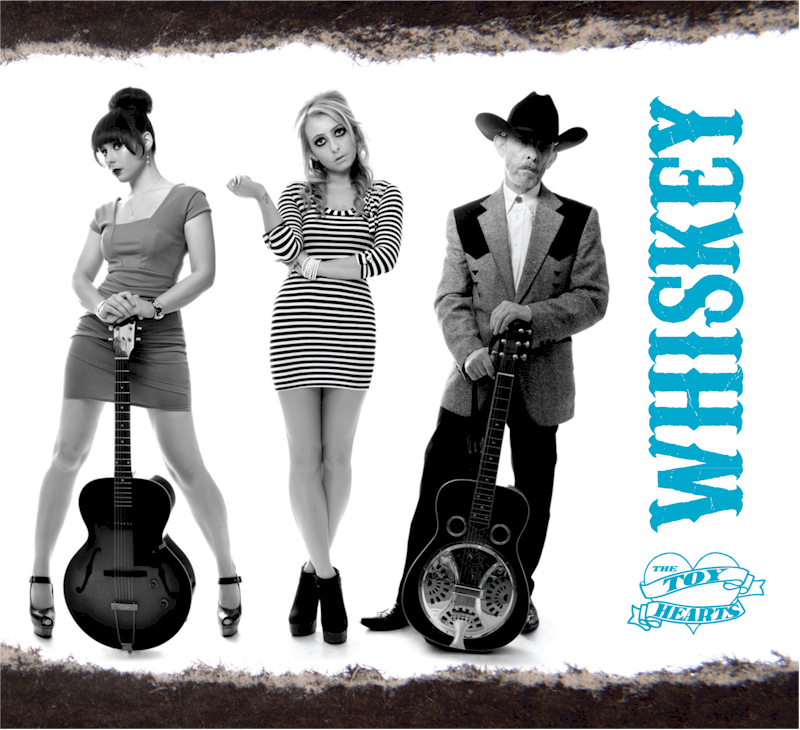
It’s the first album which is half covers, half original material. Two Bob Wills songs, a Bessie Smith song, a Ronnie Self rockabilly song, a Wayne Hancock song. And it’s the first album that has drums on it – courtesy of Dean Beresford, Richard Hawley’s drummer. We added fiddle in Nashville.Weird feeling doing all your tracks, and sending it all over to someone to mix – someone you trust, but still, they’re your babies, aren’t they?
Hannah : It’s a good thing, but… ooooh – when you’ve spent so long writing and crafting them, and getting so involved with them… it’s actually a relief. We became really ground down by the whole process with previous albums. You live with the tracks and the mixes and the remixes for soooo long. I guess the key to it all is trust.In terms of basic kit, how did this work?
Stewart: We wanted a total live rhythm track – no tracking on the core of the band. We put the drums in one bedroom… the double bass in another, I had Sophie playing rhythm guitar in that room over there (up the hall), and Hanna singing live guide vocals in here (the kitchen). I recorded on to my computer in the front room, with industry-standard software… but I used vintage mics – some vintage Neumann U87s, with valve pre-amps. The only problem was running cabling all over the place, and closing doors and wrapping people up in duvets… and it’s worked!

That’s crystallised over the past couple of years…Hannah: I’ve never understood why, playing the music we do, that we can’t have a commercial image. That doesn’t wash with me. We want to get a certain look – to be true to who we are as young women, and how that relates to our music.
Hannah: We’re in an industry dominated by men. I’m five foot two, and I do feel more empowered when I’m on everyone’s level!
Sophia: We’ve always dressed up. The Bluegrass bands that we really loved made an effort. Sometimes they got it horribly wrong – all the band are wearing putrid yellow shirts… but at least they all matched!You’ve amped this up several notches over the past couple of years. . You’re a lot more made up, the heels are higher…
Sophia: We live in a visual world. Our music is good enough if we get people to the gigs, but you’ve got to pique the interest. And that gets us to newer audiences.Is there a danger that you’re going to be dismissed as two cute girlies?
Sophia: We are continually dismissed as two cute girlies. But you’ve only got to come to our shows and watch us play.
 |
Stewart: It’s important that they see what the front of the band is. The girls are the front of the band. I don’t see my role as a very visual one for publicity purposes. But I am wearing a cowboy hat on the new shots… After all, they formed the band; the asked me to be in it. Actually they said I’d better be in the band 'cos I’m the only banjo player we know….And you’re doing all the PR right now
Sophia: Not just the PR. Hannah and I joke that our second instruments are our laptops. You can’t not. It takes too bloody long, but it absolutely has to be done. There is no manager to this band – everything that has to be done, it’s done by us.Helluva workload…
Sophia: Eventually we’ll get a manager - but it has to be someone we trust.

