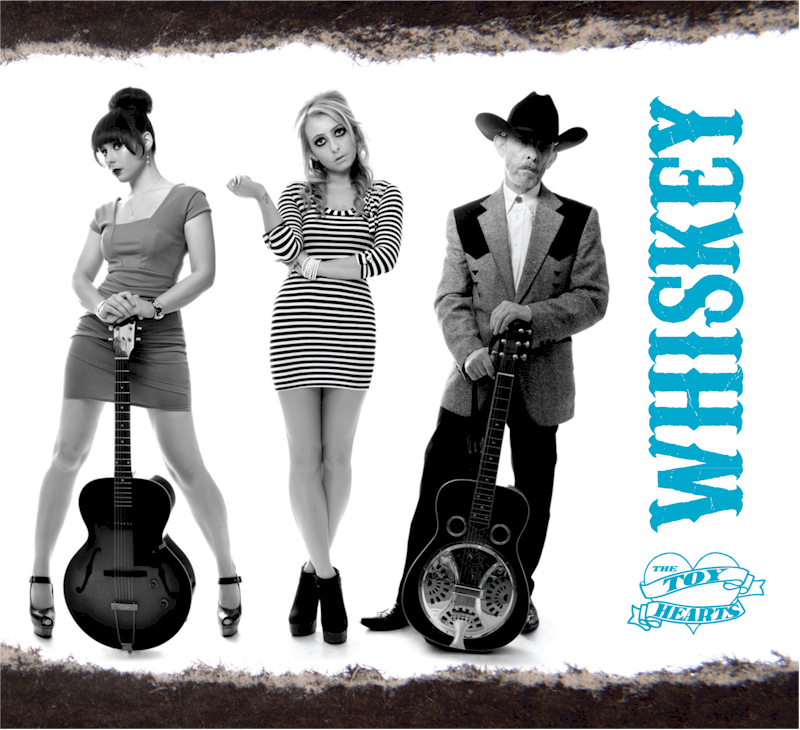
Showing posts with label Toy Hearts. Show all posts

Saturday, 7 March 2020

A Life In Music: Stewart Johnson

A Country Music dynasty. Made in Brum.


Ask any Lives in Music participant, and you'll get the same answer - there's no easy or straight route through life as a musician. You go where the work is, and if you're very, very lucky, you get to call a few shots in due course. 

This blog post is a companion piece to Stewart's Lives in Music Podcast episode, which you can listen to here, or you can scroll down to the bottom of the page and listen there. 

In Stewart's case his life took him all over Europe and the UK as a post-war Army brat, and that exposed him to a host of influences. From there, he went in to rock, with some success, followed by stage work, all the while nurturing his deep love for bluegrass and the best in country music. He's passed this on to his children, leading to the first family band in Brum, and kicking off his daughters' solo careers, crafted in the teeth of opposition on both sides of the Atlantic. It's a great story.


Links

Hannah Johnson

The Lives in Music series celebrates people who have spent a lifetime in music. They may be famous; they may be people who have spent their lives working in the background for the love of it. They all have stories. Lives in Music is a Radio To Go production. All published episodes can be found here

Published in Series 2  (series 1 episodes listed here)

1 - Brian Travers of UB40
2 - Ricky Cool
3 - Mark 'Foxy' Robinson of the CBSO
4 - Roy Adams
5 - Gavin Monaghan of Magic Garden studios 
6 - John Mostyn
7 - Stewart Johnson
8 - Dave Pegg of Fairport Convention

9 - Roy Willams (JB's, Little Acre, Weapon of Peace, Robert Plant)

10 - Simon Duggal (Simon & Diamond, Apache Indian, Shania Twain, Desi Beats)

The podcast episode


The intro and outro music in this series comes from the great bass player Mike Hatton, who you can hear interviewed in series 1, here. 'Everything Changes' is included in his excellent 2019 album 'Bassic Salvation'. 

Subscribe!
Subscribe to the Podcast through your podcast host to automatically download each episode to your chosen device. These will then land with you first, before everyone else hears about it.


If you would prefer email updates each time a podcast episode (or blog post) is published, you can subscribe to the mailing list. Head here and scroll down to the signup form.


Sunday, 29 September 2013

Joanne Shaw Taylor: Black Country blues. From Detroit.

JST's latest CD - live, one take stuff
In November, a Detroit-based blues guitarist comes to Birmingham Town Hall. Nothing particularly unusual in that, of course, we get touring US musicians all the time. But this one’s different. Joanne Shaw Taylor is a Brit, born in the Black Country, raised in Solihull and elsewhere across the West Midlands, and she’s got a ton of local connections. .

Now, she’s based stateside, by no means the only Brit to have moved countries to further a career. More recently, Davy Knowles, from tiny Port St Mary in the Isle of Man, relocated to the US to further his blues career, while Birmingham’s Toy Hearts – familiar to Joanne from their sets at the Roadhouse in Stirchley, South Birmingham - are currently in the middle of a very extended spell playing Western Swing and Bluegrass and working out of Austin, Texas.

It's not the first time that British musos have taken their versions of USA music back to the mother ship. Rewarding though it may be, it’s not the easiest of paths to travel.

Sunday, 17 March 2013

Toy Hearts head for the Western Swing motherlode. It's like Moseley. With horses.

Toy Hearts take a leap, not quite into the unknown, but certainly into a whole world of unpredictable. 

Last Thursday 28th March, Birmingham’s Toy Hearts played a hometown gig with Brooklynite Rebecca Pronsky as their special guest at the Hare and HoundsThen it’s off on the road again. In May they play a farewell gig, again at the Hare. 

Two days later, they relocate to Austin, Texas, for at least four months. Bags packed, gigs set up, visas sorted, cat rehomed. That is, all things considered, one hell of a jump. 

Toy Hearts are no strangers to the US. A family band - sisters Hannah and Sophia, and dad Stewart Johnson – they have taken their blend of bluegrass and western swing stateside for years. You might say that’s coals to Newcastle, but they’ve been generously and warmly received. That speaks volumes. And if you check out the USA Toy Hearts videoclips in this post after the jump, it all seems to fit. Still and all, it’s one thing to travel to the States and get a warm welcome; it’s quite another to take yourself to the home of Western Swing and systematically build on that.

Friday, 27 July 2012

Ricky Cool - he's got a harp and he knows how to use it.

45 years in the business, with a collaborator list as long as several gorilla arms, and still playing the the music he absolutely loves, ladeez and gennelmen, Mister Ricky Cool steps mike-side...

The thing about long-standing musicians who love what they do is - they simply don’t stop. They keep on coming, experimenting and working. That means they work with a lot of people over the years. While putting this blog piece together, I couldn't think of many posts where I’ve put more links up to more people than this one. Ricky Cool is just... so... connected.  

It’s even a family thing: he is uncle to two Toy Hearts. and if you played Six Degrees Of Separation with him, you'd wind up with Bob Wills, Robert Plant and Richard Nixon - one of the most catastrophically unpopular and inept presidents in US history - in the mix

This piece started as a side-bar to the March piece on Toy Hearts, given the family connection. But there's far too much to talk about to even consider boiling Ricky down to a mere paragraph....

Everyone calls you Trix….? 
It started when I left school. It was in 1968, when Richard Nixon was running against Hubert Humphrey for the US presidency. He was known as Tricky Dicky, and I’m Richard, so, I became Tricky Dicky, and then Trick. I was playing on my own then, in folk clubs. Someone misheard it… and it’s been Trix ever since.
What sort of stuff were you playing then, and where?
I was doing blues and folk. The regular haunt was the Royal Oak at Quinton. That was run by Dave Cartwright, Bill Caddick and Mike Billington. I first met Mick Howson at the Royal Oak , who became one of the Icebergs (and of course is hurdy-gurdy man for the Destroyers), and Alec Angel, who played bass in the Icebergs. They had a little trio doing Bert Jansch and John Renbourn stuff, in the folk clubs. 
Then there was the Lock at Wolverley, the Boat club in Strourport, Ian Cambells’ place in Digbeth, and another one in the centre of town, run by John Swift, Tommy Dempsey and Dave Phillips – a great guitarist and singer. Birmingham was more traditional, but at the Royal Oak, you had a lot of singer-songwriters, great ragtime guitarists… you could hear great acoustic blues, great acoustic folk…  
That’s still a stretch from there to Western Swing and the Icebergs, let alone the Hoola Boola Boys…
But it was a great grounding. Blues has always been my first love; I latched onto that as a teenager. I got into acoustic blues. 
I ended up running Sunday nights at the Fighting Cocks in Moseley. And that’s when I first met Stuart Johnson, (now playing with Toy Hearts), around 1971. I met him mainly because I’d got a National Steel guitar! Mick (Howson) had a little band by then, and asked me to come down and have a knock; I did.- I don’t think I was that impressive, but we ended up as a band called Brickhouse Brick. We did support for acts like Barclay James Harvest… 
And in 1976, we decided to get a different band together, to do Rock and Roll and things like that. We’d seen Chilli Willi and The Red Hot Peppers, and we thought they were great - the first time I saw anyone doing Louis Jordan. Another big thing: Mick and myself both loved Commander Cody (and His Lost Planet Airmen) and Asleep At The Wheel. So the band was initially called Tricky Dicky and the Wildcats. But because Marty Wilde’s band had been the Wildcats, we had to drop that…And the link was through Steve Gibbons, who had released 'Johnny Cool' (see the YouTube vid here ).
So I then became Ricky Cool, and the band became the Icebergs.
Ricky Cool and the Icebergs - Wait a Minute Baby, 'Bouncing In The Red', 1979. 

But you dropped right into a character: Ricky Cool took on a life of his own. I remember interviewing you in character.
You can’t have a name like that without a character… I had a gold lame suit, drapes, brothel creepers. One of us went down to the Barrel Organ in Digbeth – new landlord, hadn’t a clue what to put on – we bigged up the band, and got a residency: Saturday lunchtime, rehearse all afternoon, and then do Saturday night. A couple of months after starting, people were queuing around the block. The timing was impeccable. Everything we did dropped into place. A secretary at the BBC came down on a Saturday night when the place was heaving. She told her boss; he came down and loved it; and we got a half-hour show on the BBC. We hired out Birmingham Rep, rented it ourselves, and put a gig on there, and turned 200 people away. I can’t imagine how we had the brass neck to do just do it! 
So why didn’t it go further after all that first success?
The problem was: within the band, there was no songwriting going on. In the end, Mick and I stated writing songs. Lots of people really liked us – Mike Vernon wound up recording us – but people couldn’t see beyond the idea of a little rock and roll band. 
You’d have wound up being pushed into a Showaddywaddy mould…
… or Crazy Cavan, that type of thing. So it kind of plateau’d. We did get a lot of exposure – we toured supporting Darts. Jerry Dammers was quite interested in having us on the 2-tone label, but we couldn’t see it. I can see why now. 
And when you plateau…
There’s an inevitable decline; people became disillusioned. So eventually I hooked up with Jon Hickman and Kevin O’Neill (from Little Acre), and we became Ricky Cool and the Rialtos. Bob Wilson was in the band for a time, and Andy Silvester, who had been in Chicken Shack. I was living in Kidderminster then, which is how I had the Black Country connections with Little Acre… and in 1981 Robert Plant came to see us play. I was doing a screaming rock star parody at the time, and Robert really liked it – in fact gave me a pair of his platform shoes. Three sizes too big, but never mind!
It was not long after that that he put forward the idea of the Rialtos joining together with him and his guitarist, Robbie Blunt. Robert wanted to lose our guitarist, but I wasn’t happy with that – which was a bit pig-headed of me, when you think what might have been. But Robert was OK, and when we eventually did the Honeydrippers, it was with Robbie. 
But in the end, didn’t that stretch the Rialtos a bit too far?
It did. When that came to an end, I took stock… and then I set up another band to do Chicago blues, with Andy Silvester. Me on harmonica, Andy on guitar, we’d get a double bass player, a piano player, a drummer who could swing. It was 1982, but there was nothing like that around. It took a long time. Eventually, we formed the Big Town Playboys with Mike Sanchez and Ian Jennings. The goal was to form the best Rhythm and Blues band in the UK. This wasn’t Birmingham based – we were in Bewdley, Stourport and Kidderminster. So we started a residency in the cellar bar of a pub in Bewdley, and it got packed, just like at the Barrel Organ. That led to the Dublin Castle in London. The band lasted a long time – I didn’t, though. I left in 86. By then, I was teaching, raising a family, and trying to run a band…. 
Where did that leave you? 20 years of effort by now, after all…
After a couple of years, I went back to Western Swing, big time. Ricky Cool and the Texas Turkeys. Me, Stuart (again), Howard Gregory on guitar and violin, Howard Smith on drums – and a 19 year old Steve Clayton. It was a great band. We ran to the beginning of the 90s, before Stuart went off to do his own projects. So I carried on, with the goal of being the best Western Swing band there could be. I recruited BJ Cole, Maurice Chevalier on guitar, Bobby Valentino, Chris Haig – Ricky Cool and the Western Swing All-Stars. They were all London guys; in fact we only worked in London. I got them down to Birmingham, once, on a foggy evening to play the Red Lion. I was booking the gigs, setting up the rehearsals, all that, and they were all big time London session players. The logistics were impossible. After a while it was exhausting, and I rather fancied the idea of going back to being a jobbing musician. 
And the Hoola Boola Boys?
I’ve been working with one form or another of the Hoola Boys for ages. The band was an idea, a name for a band, run by Martin Price, the bass player. There was a Mike Sanchez and the Hoola Boola Boys, a Big Man Clayton and the Hoola Boola Boys… so eventually when I was asked to join to join, it became Ricky Cool and the Hoola Boola Boys. It was a ready-made band, which meant less pressure. And that’s how that started. 
In between, I played with a Soul Band, called Soul Train, and that led on to a reggae band, called Top Ranking…We went for the Studio One sound; we did ska, rock steady…we found a fantastic singer from Kingston, called George We did a gig at the Drum which blew the roof off. I’d build him up – ‘Ladies and Gentlemen – all the way from Kingston, Jamaica, Mister George Nightingale!” - and he’d come walking on with a huge smile.
I’d never come across this before, but we’d start a number off, and somebody from the audience would jump up and shout “Rewind! Rewind! Rewind!” And the drummer would do a fill and you’d start the number again. And if they really liked it you’d wind up starting the number three or four times. We had a lot of fun… but my god the arguments! It’s like dominoes – open warfare! 
So eventually, I was ready to front a band again – and when Martin called a few years back, it was an obvious thing. Two saxes, piano, rhythm and lead guitar, drums, bass. Including David, the guitarist from Top Ranking, who is terrific. 
 Where does the band play now? 
 Most of the gigs are around Shropshire, and some festivals, the Jam House, and so on… But gigs are had to come by. It’s all about connections. 
Well, judging by the gigs list on your siteit’s not all bad. Who’s managing?
Martin does that. 
Which leads me to ask this: after all this time – well over 40 years - you’ve worked as a pure front man, as a band leader, as music director, manager, agent, booking the gigs… you’ve done the lot, working both full time and part time. At some point, as a band grows – and you’ve seen this more than most – you have to make the decision to either carry on handling everything by yourself, or to delegate – especially with all the web work everyone has to do these days. What’s your take?
Well, I think Toy Hearts are a good example of how to negotiate all those areas. From the time where Stuart has been booking the gigs, driving the van, getting to the gig, setting up the PA with Hannah and Sophie… it’s all back-breaking work, with Hannah and Sophie doing the web stuff. They’ve taken that on, and the band has continued to grow and develop. Now they’ve got an agency involved, and that’s taken a lot of load off – the gigs are coming their way now. There comes a time when that is essential. But it’s different for each band.
Links 
Ricky Cool and the Hoola Boola boys website
Gigs list
Ricky's series of Harmonica YouTube clips starts here

Sunday, 8 April 2012

Toy Hearts: Family. Tradition. Attitude. Experimentation. High Heels. Don’t Mess.

Hannah              Stewart                Sophia           
Birmingham has brilliant musical dynasties. Many of today’s brightest are the children of 70s veterans; they grew up absorbing music, tech skills and more from their parents, almost by osmosis. 

Fabulous talent can emerge from this kind of music-intensive family environment, and that’s a great thing. But that doesn’t mean that, even if you’ve got the music nailed, the path is any smoother. 

Promo work: flyers and posters ready for mailing at THHQ
On a hot Spring afternoon, Toy Hearts are hard at it, doing promotion, prepping the latest mail-out, marketing, answering emails and booking gigs. That’s Sophia and Hannah Johnson, who run the band. Their father, Stewart, who also plays in the band, isn’t working quite so hard – but then he’s just engineered their next album. Hard work it certainly is. Four albums, constant touring, developing and self-managing over six years is a lot of work, most of it an uphill slog.

Toy Hearts operate in a very tricky and sometimes unforgiving area. Family bands aren’t uncommon in Folk music in the UK, and even more so in Country and associated genres in the US. But it just so happens that followers of those genres in the UK are not always, shall we say, the most open to new and experimental approaches. Genre-bending works a treat in Rock, Jazz and Urban fields…  but you mess with ‘traditional’ genres at your peril. To negotiate those landmines, Toy Hearts have developed tougher skins. They're now battle-hardened, and perfectly happy to go eye to eye and toe to toe. 

Marketing yourselves as a bluegrass-western swing-country band, in a home territory which doesn’t really get this music, can’t be easy.
Hannah: I don’t think it would be anything any of us would have chosen to go into – such small, niche genres – especially as young people. People have expectations of a down-homey, check-shirt, dungarees type look, and we definitely don’t have that. That’s made it difficult in a way. People see us and then don’t expect us to be able to play our instruments well, or think we’re going to play pop music. 
Fact is, Toy Hearts can really play. Sophia Johnson is an ace guitar player, and Stuart has excelled on dobro, lap steel, banjo and other exotica for well over thirty years. Hannah is a great singer and a seriously good mandolin player with it. 

With what you play – bluegrass, country and western swing - you have to be ironclad; bullet-proof, especially when you take your act to the US…
Sophia: Actually, I disagree! I think where you have to be bullet-proof is here. We go to America, and people are lovely to us. In this country, we’re told we shouldn’t be writing our own songs; or we should only be playing Bill Monroe music from the period when Flatt and Scruggs were in the band… Don’t you go down the Chris Thile  route! Who wants to win a Grammy and sell out concert halls all over the world? 
You’re kidding… 
Stewart: No, that’s a typical set of English attitudes! In America, they’re just fantastic. We’ve never had anyone in America pick us up on what we do, or try to tell us what we should be doing in the genre – unlike in England. 
But England doesn’t own the genre
Stewart: The people who are into bluegrass in Britain are a very closed community.  Those are the people who criticise us. When we put this music in front of people who’ve never heard it before, they just seem to get it. The actual bluegrass/country community in this country… unless they can have some kind of ownership over it, they just want to criticise what we do.
On the other hand… because you can play really well, and Hannah and Sophia have that sisterly harmony thing going on, doesn’t that get you acceptance?
Sophia: We have more success going into rock gigs and converting people who’s never head this stuff before, than in the UK bluegrass scene. The festivals don’t book us. 
We in the UK tend to consume and re-interpret big chunks of American culture, and put these chunks in boxes which have nothing to do with how the music emerged in the first place. People dressing up at country gigs…
Sophia: The Americans would be horrified at what goes on here. Nobody dresses up at US Bluegrass festivals in America! 
Stewart: We did a UK tour with Robert Joe Vandygriff. He’s from Texas. One of the first gigs was full of people, all dressed up... wearing guns. Robbie Joe got really uneasy.  We had to reassure him. If anybody walks in to a bar in Texas with a gun strapped on, everybody hits the deck! We had to explain to him that these are people living a fantasy, which they probably got from cowboy films rather than music.  And of course, this sort of thing puts young people off. Nobody in his right mind would want to go to a gig where he might see his uncle dressed as Wild Bill Hickok…
The band is unusual. A Father and Daughters combo 
Sophia: This was never, in any way, Dad making Hannah and I join his band. Of course he influenced us; we heard all this stuff we really liked; bluegrass was one of those things. When got to be 14-ish or so, we started to see all these Bluegrass gigs over at this Bluegrass club in Kenilworth, ad we fell in love with it.  We wanted to be in a band. And we told Dad.  
So, not Svengali territory…
Stewart: No, not at all. I mean, I would come home, and I’d hear Bob Wills coming out of one bedroom and Hank Williams out of the other, and I’d think: Those are my CDs; will I ever get them back?  The first gig that we did together… I was playing with some people at the Ceol Castle in Moseley, and they all dropped out. So I asked Sophia and Hannah them if they wanted to sit in. An ad-hoc arrangement. That became a regular one night a week residence. 
When did things move forward… seriously? Now you’re slick, tough and road-hardened. I watched you waltz on stage at Moseley Folk last year, without a sound-check, and knock the crowd dead. How did you get to that place?
Hannah:  That’s really hard. I don’t think there is a specific point when we could look and say, yep, we’re there. I don’t think we’re there! We still think we’re not good enough, and there’s work to be done; and we probably always will. All we’ve ever tried to do is to be the best we can be and be on top of our game. That’s helped us.  Constant gigging, constant practising… I’m not saying it’s made us good – but it has made us really tight – and people do notice. A lot of bands don’t do that.
You can always tell a band that works that way. It shines from the stage. 
Sophia: Dad always said to us that from day one, you need to get out and gig. Give yourself permission to not be that great for the first year or two, and to really work at it. There are so many musicians that I know who really great musicians – in their bedrooms. They cannot get on stage and perform. Part of learning to do this is that we were made to get up and perform. Play a song a million times in your bedroom – fine. Perform that song once on stage and you learn far more about it.
The album isn't officially out until late May; the rough mixes that Toy Hearts kindly let me hear me when we did the interview are very promising indeed; bearing in mind last week's post about local bands scoring national airplay, I would not be in the least surprised to hear their new material daytimes at Radio 2. Here's a video from last year, where Hannah went over the top with the kohl... 
So, the new album…
Sophia: ... is called ‘Whiskey’. We recorded most of it right here, in this house, and then we sent all the files to Nashville for mixing by Ben Surratt. We wanted to have a go at doing it our own way, so we weren’t clock watching. Another big factor in the album, bluegrass apart, is our big love for Western Swing. We’ve been to Austin, Texas about four times, and one of our favourite bands over there is the Hot Club of Cowtown, who really inspired us. A couple of years ago, Dad bought his triple-neck steel guitar, and I bought my 1958 Gibson Arch-top. And then we said… right! These have to work their way in. 
It’s the first album which is half covers, half original material. Two Bob Wills songs, a Bessie Smith song, a Ronnie Self rockabilly song, a Wayne Hancock song. And it’s the first album that has drums on it – courtesy of Dean Beresford, Richard Hawley’s drummer. We added fiddle in Nashville. 
Weird feeling doing all your tracks, and sending it all over to someone to mix – someone you trust, but still, they’re your babies, aren’t they?
Hannah : It’s a good thing, but… ooooh – when you’ve spent so long writing and crafting them, and getting so involved with them… it’s actually a relief. We became really ground down by the whole process with previous albums. You live with the tracks and the mixes and the remixes for soooo long. I guess the key to it all is trust.   
In terms of basic kit, how did this work?
Stewart: We wanted a total live rhythm track – no tracking on the core of the band. We put the drums in one bedroom… the double bass in another, I had Sophie playing rhythm guitar in that room over there (up the hall), and Hanna singing live guide vocals in here (the kitchen).  I recorded on to my computer in the front room, with industry-standard software… but I used vintage mics – some vintage Neumann U87s, with valve pre-amps. The only problem was running cabling all over the place, and closing doors and wrapping people up in duvets… and it’s worked! 

Marketing the band is critical…You take that one on head-on.
Hannah: I’ve never understood why, playing the music we do, that we can’t have a commercial image. That doesn’t wash with me. We want to get a certain look – to be true to who we are as young women, and how that relates to our music. 
That’s crystallised over the past couple of years…
Hannah: We’re in an industry dominated by men. I’m five foot two, and I do feel more empowered when I’m on everyone’s level!
Sophia: We’ve always dressed up. The Bluegrass bands that we really loved made an effort. Sometimes they got it horribly wrong – all the band are wearing putrid yellow shirts… but at least they all matched!
You’ve amped this up several notches over the past couple of years. . You’re a lot more made up, the heels are higher…
Sophia: We live in a visual world. Our music is good enough if we get people to the gigs, but you’ve got to pique the interest. And that gets us to newer audiences.
Is there a danger that you’re going to be dismissed as two cute girlies?
Sophia: We are continually dismissed as two cute girlies. But you’ve only got to come to our shows and watch us play. 
                                      
In a lot of the photos, you (Sophia and Hanna) are upfront… Stewart, you’re in back.
Stewart: It’s important that they see what the front of the band is. The girls are the front of the band. I don’t see my role as a very visual one for publicity purposes. But I am wearing a cowboy hat on the new shots…  After all, they formed the band; the asked me to be in it. Actually they said I’d better be in the band 'cos I’m the only banjo player we know…. 
And you’re doing all the PR right now
Sophia: Not just the PR. Hannah and I joke that our second instruments are our laptops. You can’t not. It takes too bloody long, but it absolutely has to be done. There is no manager to this band – everything that has to be done, it’s done by us. 
Helluva workload…
Sophia: Eventually we’ll get a manager - but it has to be someone we trust. 

For full gig details, check the gigs page on the Toy Hearts website