Showing posts with label politics. Show all posts

Sunday, 21 May 2017

Protest and 60s flashbacks in 2017

Something's happening here... 
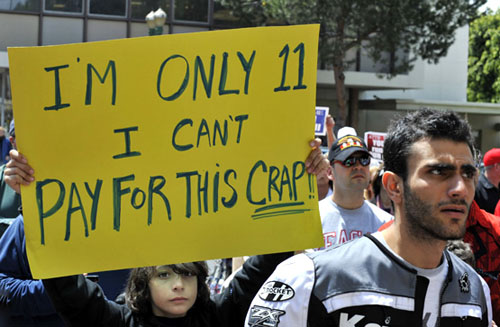

Thanks to SMUQ on flickr
Lately, I've been thinking about protest songs. The ones we used to hear all the time back in the day. The ones I got to play on the radio. 

You don't hear protest songs on the radio now. So it was nice to hear the excellent Amit Dattani give an outing to Dylan's protest anthem 'The Hour When The Ship Comes In', at a gig this week. People were singing along, too, to a song recorded in 1964.

Earlier that week, on Facebook, a pal commented warily on fresh video cameras in his neighbourhood. So I put up a YouTube link to Buffalo Springfield's 'For What It's Worth', to be ironic, like you do. The verse I had in mind was this
Paranoia strikes deep
into your life it will creep
It starts when you're always afraid
Step out of line, the man come and take you away 
Hippy boomers will remember it. But It was only after I stuck the link up that I realised the song, a staple of my teenage years, was fifty years old. That set me thinking.


The music of the day - protest. Then. 

In the 60s, Protest Music was big. America, especially, saw waves of politicised unrest: the 1966 Watts riots, decade-long Vietnam war protests, with riots at the 1968 Chicago Democratic convention, and the 1970 shooting of students by the National Guard at Kent State.

Protest fed the music we listened to. Some of the most incendiary and uplifting soul music ever recorded was triggered by the black power movement – think Aretha and 'Respect', BB King's 'Why I sing the Blues', Marvin Gaye's 'Inner City Blues', Stevie Wonder's 'Living For The City'....

Us white kids in the UK had precious few notions about the brutal realities behind these songs. It was damn good, passionate music. We loved it, we bought it. The record companies who sold it weren't complaining. And there was punchier, radical stuff, from the likes of Gil Scott-Heron and the Last Poets, who made damn sure you couldn't miss their point. Or check out the Staple Singers. Listen to the song, dig into the background. 


White protest was higher up the UK agenda. Spearheaded by Folk in the 50s and 60s, it eventually fed into Rock. In the US, it was powered by the ongoing threat to a generation: that of having to go fight in Vietnam. So we had CSNY's 'Ohio', The Doors' 'Unknown Soldier', Country Joe and the Fish's 'Fixing to Die Rag', Jefferson Airplane's 'Volunteers', Simon & Garfunkel's 'Silent Night/7 O' Clock News', Creedence Clearwater Revival's 'Fortunate Son'... at least a dozen great songs from Dylan. I could go on.

Meantime, the Beatles and the Stones struck, in my view, distinctly Lib-Dem positions with 'Revolution' and 'Street Fighting Man' respectively – although, later on, 'Gimme Shelter' and Lennon's 'Imagine' evened things out a bit. But Vietnam wasn't a generational threat to UK kids, so many of the truly venomous and articulate songs largely passed us by.

I got lucky, though. My first paid radio gig was at a rock station in the USA, in 1971, in the middle of all this. So I heard a lot of this material when it came out. 


The US Draft and a radicalised generation

Let me paint an unsettling picture. Generations of kids of college age waited to learn their birth date-related number in a bi-yearly lottery draft. Draft numbers ran from 1 up to 365. The lower your number, the greater the chances of being sent to be shot to pieces in Vietnam. The higher the number, the lesser the risk. In the worst years, they'd get well into the 200s, working through the available candidates.

At the station, when we got the latest set of draft numbers, people could call the studio up to find out their number. I remember telling one guy his number was 3. He hung up without a word. Another lad had drawn 315. His reaction was understandably gleeful, but also nauseating: this wasn't a lottery anybody won.

My station, staffed by hippies with ponytails, played rock, catering to a threatened generation. Our music reflected their concerns. This was a constant, overwhelming, threat which galvanised a generation. It lasted until the end of the Vietnam war. After that, sadly, a lot of people shed their political concerns without a backward glance.


The music of the day now? Hmmm.... 

That was fifty years ago, and oh, how things have changed. As I said, we don't hear that many protest songs these days, certainly not on mainstream media. Sure, people are still writing songs (and, now, spitting rhymes) of protest. They just don't seem to fit the marketing plans of our contemporary pop megastars.


Ever get the feeling someone's watching?
The primary agent of change has been the web, of course. It has empowered us, yes; but it has divided and distracted us much more. Now, we get predigested protest, simplified and manipulated into slogans and memes, fine-tuned to boost our existing assumptions and fed to us in our online silos. Often there is scant regard for the truth.

We read of dark forces operating in sinister alliances, who don't have our interests at heart. Political-digital skullduggery is rife. We can't control it. That sense of doom and mistrust of forces we couldn't fight back then, echoes down to me when I look at my world today. Then, it was, simply, 'The Man'. Now? Take your pick – we have a cornucopia of paranoia to select from. And it's all logged online. 

That's what brought me up short when I stuck Buffalo Springfield up on Facebook. A simple, slightly awkward but brilliant and direct song, that still works. But now we conveniently register our protest online. And, like protest songs were back in the day, our protest has become a marketable commodity. Have your say! Share a political Facebook posting, put up a YouTube link.... and look, everyone has protest emojis.


Lesson learned? I'm too close to now to be able to tell. Maybe things haven't really changed. It's not that different from 50 years back, except that now the waters of bland and diverting entertainment have, again, closed over the rocky outcrops of dissent. Then, protest music, was, typically, co-opted and repackaged by the entertainment industry. Nowadays protest is delivered online with smooth, machine-tooled, well-researched efficiency on our social networks. We sign the petitions, we rage online in chatrooms. It's addictive - we still lap it up. Back in the day, they used bread and circuses.


__________________________________________________________________________


I do stuff on Brum Radio, a volunteer-run internet station. Listen online here; download the Brum Radio app here. My Brum Radio page is here; scroll down for all the shows. 

__________________________________________________________________________

I'd love it if you signed up!

The Mailing List is the best way to follow topics on this blog. You get a short email, most Mondays, with the big recent topics, and once in a blue moon, an offer or an exclusive freebie. I won't pass your address on, promise. 

Pop your email in the box below, and you're all set.


Sunday, 30 April 2017

Elections. Hustings. Culture. I'm so depressed.

It's election season. God help us.


I went to a hustings this week. A what? A hustings – that's where a bunch of people who want to be elected try to convince you that they know what they are talking about, and have an idea of a way to go forward.

Elections. Again, dammit. The reality is a parade of insincere individuals spouting robotic slogans to convince us that they really care, when for the past ten years (and more, going back to 1997 and Tony Blair) it's been painfully obvious that they really don't.

This hustings was for the West Midlands Mayoral election, and the specific area for discussion was Culture. You probably didn't know that this was going on. And if you did, you probably weren't that excited – after all, the hall (the small one in the Birmingham Rep/Birmingham Library complex) wasn't even full.


I wanted hope. I lost the will to live.

God, it was depressing. Six candidates, wielding sound-bites ranging from old-school hard left gags (the Communist guy, who might be good fun at a party) through to the deeply depressing 'Take Back Control' slogan that Labour have saddled themselves with – what were they thinking of? But as for even half a spark of originality? Thin pickings, I'm afraid. The Green party guy punched above his weight, and the Lib Dem lady was ever so nice and reasonable, but I don't see either of them sweeping the board. As for UKIP? Talking with any credibility about arts and culture in the most diverse region in the UK is, frankly, a bit of a challenge.

Meantime, at the coal face - anyone been there to take a look?  

Local knowledge, let alone recognition of the problems people in the creative sector have to deal with was pretty much non-existent. Sion Simon, the grumpily subdued Labour guy, muttered a few words about local music, which was the least I would have expected from an ex-employee of Music UK. No-one else had the remotest clue about how brilliant our music scene is. Of course, they'd have had to have done a bit of research. That means rather more than just going to a play at the Rep.

There was talk of Channel 4 coming to Brum. There was talk of Stephen 'Peaky Blinders' Knight's plans to set up a local studio. Both of those would be nice, of course. But nothing's happened yet. Still, it let the candidates witter on about theoretically positive developments

And there was talk of major gigs, big names coming to Brum! Whoopee! But those events are self-funding, and when you think about it, they actually extract money from our region. Some vague talk about corporate partnerships emerged from the (very well-funded) Tory candidate, Andy Street, who bounced about enthusiastically, but actually said very little indeed about anything, and saved a low politico blow for Sion Simon to the very end. 

But as for culture? Oh, come on. Nobody paid the slightest attention to the grass roots areas where new theatre, dance, music, poetry, multimedia and experimentation are flourishing, entirely through the efforts of dedicated individuals who love what they do. Nobody talked about growing and supporting local talent. Nobody talked about securing and preserving venues and platforms for talent to emerge. Nobody has the remotest notion of making positive use of the brilliant work that's already going on, and which will continue to go on, with no support from funding bodies. Nobody even acknowledged that the grass roots is where it all starts from, and that's why the grass roots are so important.

So.... going forward, chaps? Any ideas? At All?

The audience was, predictably, clued up on funding. Questions ranged from the well-documented and obscene gap in ACE funding, where London's spending ran at £26 a head, and ours ran at £12.33 a head in 2015/16 - before the more savage recent cuts - to the insultingly paltry BBC Midlands regional spend, which has led over the past two decades to a virtually complete collapse in local radio and tv production. When these figures came up in questions, every candidate sprang to life and banged on about how jolly unfair it all was. But as for a strategy to build up from where we are now? I heard nothing.

I will vote on May 4th. I will vote with my heart. But I don't expect things to change in the slightest.

Saturday, 16 July 2016

Brexit, the Brum Music Biz and three wise men called John.


I can't believe it's only been three weeks.


I voted Remain, for what it's worth. I'm still gobsmacked I had to vote at all. Still stunned at David Cameron's catastrophic unleashing of a political and economic sh*t-storm.

It's been three convulsive, compulsive weeks. The Tories have slaughtered one another spectacularly and dishonourably. Labour is doing much the same thing, just more slowly and messily. Labour doesn't do clean-cut, but they match the Tories for dirt. Tragically, no matter who comes out on top in the Labour leadership race, the party will probably now never be a real-world, viable, opposition again. I really, really hope I'm wrong, but I won't hold my breath. Just do the math. 

Sorry, I realise I'm venting, and this is a music and radio blog. I don't usually touch on politics, but this is massive. It impacts on all of us.

Brexit and Brum music? 
It's not good news. John #1 says so. John #2 is cautious at best; John #3 has already taken the hit.

Sunday, 8 May 2016

Whittingdale's little list: The White Paper and the BBC


Clowns to the left of them. Jokers to the right...


At the BBC: Ariel between Wisdom and Gaiety. Mike Knell, Flickr
I've got two pages open on my screen as I write this. Both make my blood boil. The first is yet another anti-BBC piece from Rupert Murdoch's Times, where Culture Secretary John Whittingdale is reported to have joked to a bunch of Tory Students that the end of the BBC might be 'a tempting prospect'. The article goes on to list Gary Lineker as the first to spring to the Beeb's defence. Go Gary, I say; power to you in your underpants.  

Item number two is just as jarring: a strident attack on the BBC from new boys Evolve Politics, who emerged after the Labour Leadership election, along with The Canary and Momentum. They're all over my Facebook feed. Depending on your politics and/or your Facebook 'friends', they may well be all over your Facebook too. That's the creepy way the thing works. Ironically, it's great for marketing...

Evolve Politics and pals are solidly, uncritically, behind Jeremy Corbyn; Jezza can do no wrong, ever ever ever. Evolve are never less than outraged. Here, they slam the BBC for being disgusting Tory stooges.  


Poor old Beeb, eh? Attacked on all sides, while the troops on the ground have to soldier on. It's reminding me of Tennyson's poem...

Sunday, 15 November 2015

The BBC's future (well, maybe) and the Beeb right now


Time spent this week with both the high and mighty and the grafters


A weekend back, I was bantering on air with Les Ross on BBC WM, doing the Sunday newspapers. Les had returned to his first station for their 45th anniversary celebrations. 

It ran very smoothly. Les was on top of his game, chatting with the newsreader, trailing down the day. It sounded great. We didn't exactly cover a lot of news; that's how it is with a presenter like Les. The vibe in the studio was terrific. A team of pros delivering effortlessly good local radio to a committed audience. It worked, really worked. 

Two days later I went to a meeting run by powers rather higher up in the BBC. This was much more buttoned up, and, dare I say it, a little tortured and convoluted.

Sunday, 24 August 2014

Terry and Gerry! The reunion! The tour! It's only been 27 years.....


They're back. Just don't gob on them this time round, if you wouldn't mind.

Skiffle Punk? This one might have passed you by, especially if you're not of a certain age. When word trickled out that a much loved band might just be reforming, there was a muted but marked explosion of joy in certain quarters. 

Who are the band? Terry and Gerry, that's who. The guys who did skiffle punk. Who would show up on gigs with Hank Wangford. Or the Nightingales. The guys who scored Peel sessions, to the joy of many (but remember, Peel fans: we did them first at BRMB, and there's a feature length Terry and Gerry video at the bottom of this post, with lots of BRMB studio and 80s Brum footage). 

Picture the scene; it'll come back to you. You're at a punk gig in the mid 80s; elaborate mohicans, inventive mascara and piercings are in evidence; not that many tatts, though. Heavy heavy reggae bass vibes pump through the sound system, and indeed through your guts. You could cut the air: it's full of exotic smoke, and the odd whiff of stale sweat. And then - these baby faced wholesome guys walk out on stage, in tuxedos and string ties. Stand-up bass, acoustic guitars, washboard. 

You'd expect them to get slaughtered, right? Pah. Not a chance. 

Terry and Gerry's secret weapon is unstoppable, mountain-moving, ferocious, beaming enthusiasm. Breakneck, super-tight song delivery that makes the Ramones look like blissed-out progrockers. 

Terry and Gerry 2014: Su, Terry, Gerry and Mick      Photo Brian Homer
And now they've re-formed. Pretty much all the original players in one place: Terry and Gerry of course, Su Sonic and Destroyer Mick Howson. Probably no hurdy-gurdy in the set, though. 

So why the reunion? Is this for tax reasons?
Terry: Ha! We're trying to raise some VAT to try and help the Tory Government!
Gerry: To pay for our NHS bills!
There's been a spate of 80s bands, mainly pop,who – suddenly – reappear on tour after years away. I guess the royalties must have dried up.
Terry: Ours dried up a long time ago!
So, back in the day, there you were, doing benefits for the miners, doing Peel sessions. You were a very very big name, out of Birmingham, for a brief period. But all that was more than a generation ago. So why the reunion?

Terry: It's ten years since John Peel died. Obviously yourself, Mike (Davies) and John (Slater) did a lot for us locally. But John Peel got us established nationally. He had that connection. There's an October concert commemorating John Peel in Stockton on Tees, with the Nightingales and a lot of other bands of that ilk. Gerry got in touch; we were all still alive and in the same country – and all playing music.
Gerry: But we thought it was pointless getting together for one concert. So I put some feelers out. People, thankfully, weren't as rude as the promoters. We tried to find some of the original promoters – Dave Travis, in Birmingham – so now we've strung together a John Peel commemorative tour. With an EP, with new songs. It's going to be a good thing. 
So we got together to see it it still works. And it was the most amazing, magical, energetic thing that brought back everything that was good about 80s Brum, and Terry and Gerry! 
Terry: It was amazing.
Gerry: After the first rehearsal, I went home feeling 20 years younger. 
When you're doing something special, you never know at the time, do you? Because you're in the middle of it. And you guys did put your finger on something. But you never know if you can recapture those golden days...
Terry: I'm confident about the music. Whether anyone else will enjoy it as much as we do...
What about the audience? When Miles and Erica played the Hare and Hounds, there were chairs at the front for old crocks like me. When Steve Gibbons played, there were chairs all the way back...
Gerry: I don't know... we've got a few younger followers. We do get emails from younger bands who have been influenced by us – The United Stoats of America, who do some of our tracks. McCavity's Cat, a Canterbury rockabilly band. Because I've been playing in the folky world, I've heard lots of our songs as floor spots. Wait a minute? That's my song! 
That must feel great.
Gerry: Oh, it's brilliant! It's really nice. 
Of course, as is the way these days, everyone is in different bands as well – Terry is running Forro Social, and Gerry has the Gerry Colvin Band
Terry: I'm in three bands at the moment. And Mick Howson is in the Destroyers, who are fantastic. 
And here's an exclusive cut, live in the back room, recorded Monday 18th August


So at the gig, are we in for a Brum nostalgiafest? I get the feeling there will be a lot of faces there. 
Gerry: We are not resting on our laurels. There'll be an EP, with five new songs and a Yeah Yeah No song. And vintage T-shirts. But Su will play the same washboard we used twenty seven years ago. 
But it is a different climate for you guys now. That's why I kicked of with that gag about reforming for tax reasons. You won't make a lot of money off the record – although it won't cost as much to record. But you do stand a chance of making more money off the gig and merchandising.
Terry: For us, music was first. We wanted to live from our music. It was lovely to be a musician. 
I'm not for a minute saying that that's why you did it in the first place. But the other side of the coin is, as working musicians, the challenge is how you can make a living from your work. 
Gerry: It is. With records – I still call them records – somebody else is making money out of them. But live performances are different. And we never really managed to get the energy of the live performances on record.
There was a huge political impetus to the scene you were part of. I think it was largely driven by opposition to Margaret Thatcher. 
Terry. Yes. I do wonder what's happened to the kids today. What aren't they more angry?
Some of them are....

Links:

Terry and Gerry's facebook page
Terry and Gerry play the Hare and Hounds on Sunday 2 November. Tickets here


See also
The Stuff Of Wonder
Neon Hearts


See more music posts on Radio To Go

_________________________________________________________________________________


Sign up to the mailing list for weekly updates


Monday, 10 March 2014

The Other Campbell Brother

While the three younger Campbell brothers wrestle with UB40's disputes, elder brother David is rebuilding a folk career, with echoes of their legendary father Ian.

Photo courtesy of Ian Dunn at Principle Photography
Among Birmingham's musical dynasties, one family stands out: The Campbells. The late Ian Campbell was a stalwart of UK folk from the 50s onwards. Driven by socialist principles, he ran the famed Jug Of Punch folk club for decades, hosting everyone who came up through the UK folk scene of the 60s and 70s.

Three of his sons, Robin and Ali, and later Duncan, helped rewrite British Reggae. The fourth is a traditional folk singer. David Campbell, the eldest by two years, is re-emerging in folk clubs and festivals. Like his dad's work, and like the early UB40 recordings, his work is shot though with political conviction; it's a family tradition.

Sunday, 6 October 2013

Police Bastard: still angry after all these years, deep in Punk's underground


"I think there have been times when we’ve been in danger of disappearing up our own asses."  

Death, Doom, despair and TERRIFYING NOISE... discussed.

Mister Doom                            Mister Sampson
As a young rock DJ, I covered the decline of progressive and hard rock throughout the 70s. Pub-rock rose and fell, global forces like Springsteen and Fleetwood Mac emerged, and Birmingham moved from Monsters of Metal to cross-cultural mixes, (UB40, Apache Indian, the Beat, Ruby Turner). Oh, and let’s not forget New Romantics. On second thought, let’s.

By the end of the decade, Punk emerged, to be rapidly commoditised as product and fashion trend (Generation X anyone?), and used as a career-launching platform (Police, Squeeze and Boomtown Rats). Then the mainstream lost interest, so Punk went underground, morphing from a bunch of snotty teenagers flipping the bird at the man, into something else altogether. Above all, Punk developed staying power.

Police Bastard were punks once. Now they’re punk/metal/thrash, a set of 40 somethings with a remarkably long history, and a new album, Confined.  The dumb rebellious simplicity of the late 70s has been replaced by something more complex, more considered, even dutiful. The music? Savage as ever, of course – but now, these guys can play. Johnny Doom and Mark Sampson talk it up after the jump.

Tuesday, 26 March 2013

The Selecter at Reggae City in May: It's not the same old show


Pauline Black talks racism, sexism, 2-Tone, Ska and Reggae, re-forming your band, keeping it punchy, and not wallowing in black and white nostalgia.

I’m not absolutely sure, but I'm probably the first (legal) radio DJ to put The Selecter on air. We used to do sessions at the old BRMB Radio, recording up and coming West Midlands bands just as they came to the boil. This included UB40 and the Specials, pretty much all in quick succession, in 1979 . It worked a treat: the station scored great listening figures and got to look - very unusually for the old BRMB - hip and cutting edge. And the bands got exposure and MU scale cash. Everyone was happy. It worked. Just saying...

So, back in the day, Pauline Black came in for an interview to tie in with the session. Now, Pauline Black’s on the phone ahead of a string of midlands dates - you'll find them at the bottom of this post. 34 years on, The Selecter is touring again, and a stroll down 2-Tone lane it ain't. Two new albums, new members to go with founders Gaps Hendrickson and Black, a richer mix - and the same fierce attitude. 

Tuesday, 29 November 2011

Much ADO about the city and its musicians. And a significant first birthday.

Two events on two successive Thursdays, both significant and promising in their own ways. Last Thursday, the admirable Birmingham Music Network, which runs on a budget of nanopennies, providing a very useful platform to meet and talk about all things musical in the city, hosted a discussion/debate at Creative Networks in Millennium Point. The discussion was about Birmingham City Council’s sudden discovery that, hey, there is music being made in the city, and that, with a bit of luck this music thingy might, er, generate a bit of money. You didn't hear about that either? Wow. Funny, that.

I was on the platform in my capacity as local media and music industry dinosaur, along with the sagacious Dr Paul Long from BCU, local video maker Anthony Hughes, and the brilliant Abi Seabrook from Lady Georgiana. Abi and moderator Andy Derrick were the only full-time music professionals.