Showing posts with label Ruby Turner. Show all posts

Monday, 7 October 2019

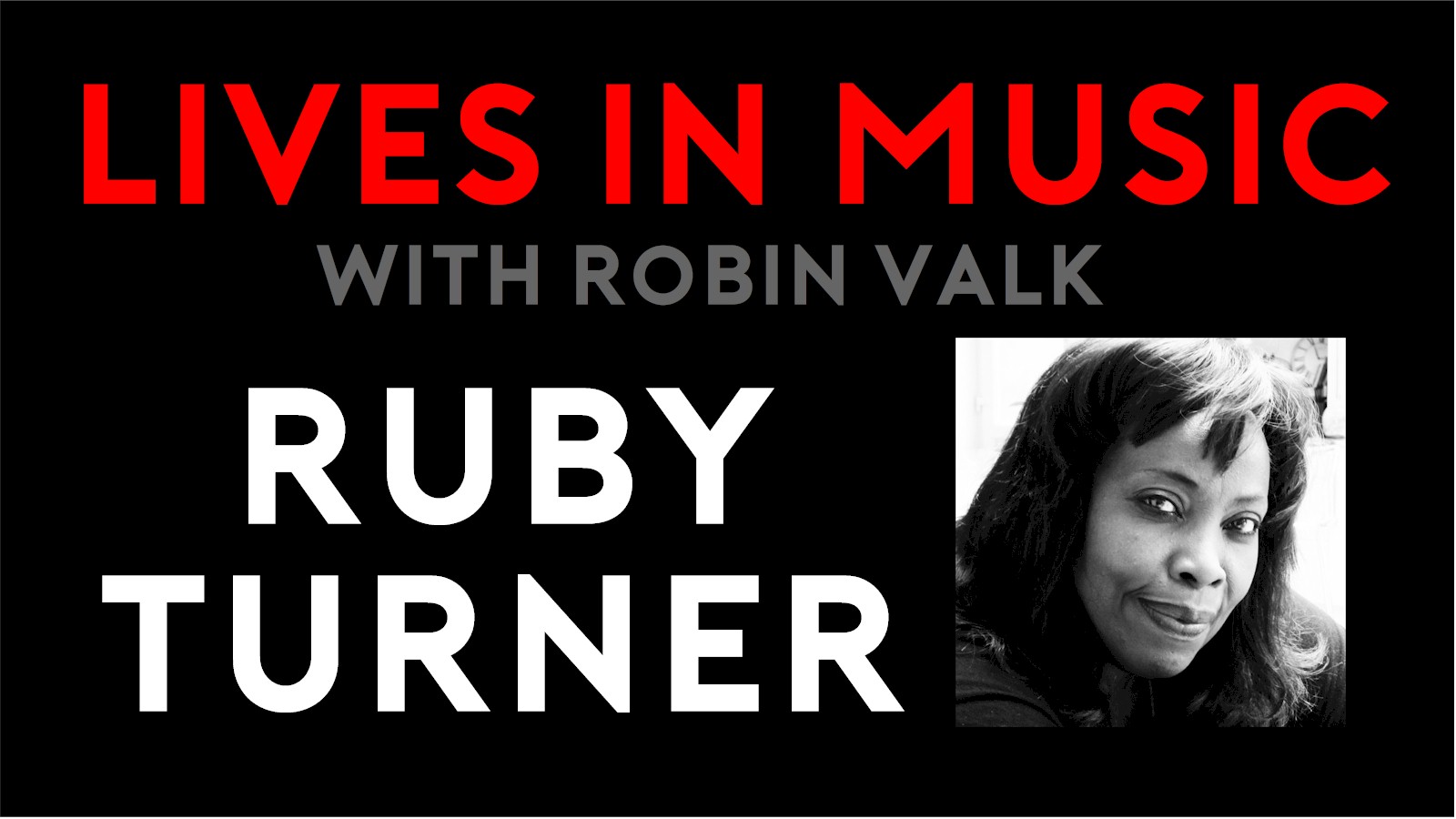
A life in Music: Ruby Turner

She's only been knocking the ball out of the park for four decades


This is a companion blog post to accompany the first episode of my new podcast series: Lives in Music

The podcast has just been published: go here to listen and/or download or go to the player at the bottom of this post. 

The plan is for the series to appear everywhere podcasts are to found, but it’s early days.That link should get you started. 


Romantic notions? Pah.


I had a theory that there must have been some sort of genius music teacher in Handsworth back in the seventies. Because for three years straight, that mixed and punchy Brum inner city suburb delivered an act each year that went on to shake the foundations worldwide: Steel Pulse, Apache Indian, and Ruby herself. 

And, face it, kids like Robin Campbell of UB40 and Ranking Roger of the Beat were hanging out at the shebeens, soaking it all up. Handsworth did a lot for popular music back in the day.

I put that notion to Ruby during our Lives in Music chat. She, as you'll hear, slapped it right down as my being romantic and fanciful.

There's not a lot of music in this podcast: copyright regulations prevent that. Any music has to be podcast-friendly. So no copyright infringements, and anything used must have the agreement of the performer. So there are no clips of Ruby to listen to, apart from when she bursts into song in mid conversation. That's a shame, because the stuff she does with Jools Holland and with her own band is bloody marvellous. But skip down to the links list, and you can explore to your heart's content.   


Links and credits

Download (and share) the podcast here: Lives in Music: Ruby Turner 

Or stream here:


Ruby Turner's website
Jools Holland's website
Find out about Fado music
Handsworth Evolution: a documentary I made in 2010.
Ruby Turner on YouTube


The Lives in Music Podcast Series


There are ten episodes in this first series of Lives in Music. They will appear weekly from October until early December 2019. I'm now working on Series 2. The central thrust is to honour and highlight those people who have, literally, spent their lives in music, whether it's making music or empowering those who do. 


Lives in Music Podcasts now published:  

with show notes and music links  

2 - Steve Ajao 
3
 - The Men who make Mellotrons

4 - 
Mike Hatton 
 
5 - 
Horace Panter

6
Jasper Carrott     
7
Sam Slater 

8 - John Patrick
9 - Gordon Giltrap
10 Jim Simpson

The theme music for this series is by local band Big Q Fish. 'Boksburg Jive Toon' was written by Brian Neil, and recorded at the Jam House, Birmingham, in 2017.

________________________________________________________________________

Subscribe to the mailing list!


* required field


Email Format


Sunday, 11 October 2015

You're in the studio at last after all these years. What now?


You know the songs, backwards. What happens when you go in the studio to record? Here's two different worlds with quite a lot in common.

    Ruby by Rich Shakespeare;    Chris by Alan Cole Photography         
I've been talking recording a lot recently. Last month, Chris Cleverley, an astonishingly talented and inventive singer-songwriter, wrapped up his first album; we talked about the process. If you've haven't seen seen Chris yet, by the way, go. Soon. 

Last week, I took tea with Ruby Turner, who is fresh from laying down vocals fronting Jools Holland's R and B orchestra. She's done over 15 albums of her own; she's a featured vocalist with Holland; she's guested everywhere. Ruby hasn't so much bought the t-shirt as designed the damn thing. So I asked her about the recording process too.

Two very different perspectives: tyro and veteran. I wondered if they had anything in common. Turns out they do.

Sunday, 19 October 2014

All that Ruby Turner Is


Straighten up and fly right! Ruby's still in the game, and that makes me happy.

 Photo: Caroline Harriott at PurpleOrange
It's a nice afternoon – sunny and bright. King's Heath is managing to look quite pretty, which is no mean feat. I've fixed to have a catchup with Ruby Turner. Normally it would be at her place, but the builders are in. So the excellent Adam Regan has kindly given us the back bar of the Hare and Hounds to chat in. That makes six blog interviews so far at the Hare – Katherine Priddy, Goodnight Lenin, Miles Hunt and Erica Nockalls upstairs in the dressing rooms, Brian Travers and Terry and Gerry downstairs – and now, Ruby. There's a new album. Out on her own label again, 'All That I Am' packs a very wide range of punches.

Ruby and I go back a loooong way. When she was a wee slip of a girl, just starting out, she was surrounded by some of Birmingham's best musicians. We did sessions at the old BRMB, she gigged at the 70s Lark in The Park at Cannon Hill. It was grand. Ruby wound up representing commercial radio at the European Broadcasting Union Rock Festival, with me elected as tour manager. It was testing - half the band disappeared into a bar at Frankfurt station the moment we got in from the airport. They eventually showed up in Nuremberg, 140 miles down the road, slightly the worse for wear. Ruby went on to to tear the place up and down and sideways. Gratifyingly, Ruby and band completely blew Radio 1's entry away. We were on a tight budget; the BBC mob was definitely not. Score one for the indies. 

Decades down the line, Ruby is still at the top of her game. Now, when not touring with Jools Holland, she runs her own band. She picks the musicians, rehearses them, and keeps them in line. And with the possible exception of the great Steve Gibbons, she's had the longest recording and gigging career of any Birmingham musician that I've been lucky enough to work with.

These days, it's not a question of begging for pathetic airplay scraps at risk-averse local radio. Ruby takes it to the top, scoring a huge chunk of time on the top show on the UK's biggest station, guesting on Chris Evans' breakfast show on Radio 2

So... the new album. Lots of nice things being said about it. Lots of airplay on BIG shows on the big station – Chris Evans on Radio 2 is a cracking way to tell the world... But it's taken a while since your last. Why?
It took a very long time. There was so much going on. As you know, a lot of tours with Jools... then I had to find a new producer to work with. Cos you know I used to work with Bob Lamb – the last album, Moving On, was amazing. But Bob decided to quit and leave. That left me in limbo. He was a great friend and a wonderful producer. We had a great connection musically. But I understood why he had to call it a day – he just wasn't happy.

But look, Ruby, you now have vast professional experience and a brilliant reputation – you could have your pick of great people.
I guess I can. But I keep to a small circle of friends that I know. The truth is I work well with these people, and I always go back to them, where I always feel comfortable and I can be myself. I'm not saying I wouldn't venture out and work with new exciting producers. But unless you're a huge name and you've got a huge record company behind you, then nobody's really interested. So I work with what I've got,. That's the story of life – work with what you got.

You've got some killer musicians to work with, though
I am blessed, yes.

You're writing a lot more these days.
I guess it's confidence and life experiences. With any album, the process is – you get writing. Obviously you have a producer in mind, but in Bob's absence, I kept writing anyway. I'm learning. Learning to be myself and to trust myself. We all have our stories. I've gathered a few myself. I feel quite liberated and, dare I say it, quite grown up!

You kick off with a gospel track that nails it from the first lick.


I cut that as a prayer. 

Then there's an older track – your duet with Passenger. 


This is a much more ambitious album technically. You've even got show tunes. That's a bit of a mix.
Well, that's me. It's what I am. Way back I did a wonderful night of Gerschwin. It was like a moment of time. Great days. When I was putting the album together, that was my thinking. I was going to put Embraceable You on there. Then Time It Was came up.

Even though your faith pumps thought every bone in your body,you've still got a cheatin' and lyin' song there. Dark End Of The Street: the classic country song of adultery and deception
Humans. Human failing, It's all that we are. There's a track on there called Ask Me. There's a line that goes

I'll Tell You I Ain't No Saint
Got My Faults And I'll Take Some Blame.
I wanted to do our failings, our spirituality, our longings...all those things that makes us human.

So what kind of reaction have you had?
Oh, great. I've had feedback from America, where I don't have a deal at the moment. Everything is happening so quickly. But because I'm working so hard with Jools Holland, I don't have quite enough time to look after all that. But - lots of airplay – Radio 2 have been very good to me. It means an awful lot.

Tell me about being a working muso. You've done this for over thirty years.
It's a battle. You have to be match-fit. I've got some down time before the next tour. So I'm doing badminton, and walking and swimming. Make sure you've got the lung power and the stamina. A fitness level that will take you through the day to day stuff – sitting in cars for hours, lugging your cases into hotel rooms.

Eating right?
Oh yes. You got to start the tour in a good place. You got to hit the stage running, at your peak, every gig. Some people use Jack Daniels. I don't. It's about taking care of yourself. Dairy can present problems. You got to keep yourself hydrated. And plenty of sleep. And walks, plenty of fresh air. I'm hanging in there.

And where's that kid who plays piano with you?
Reuben James? I got a text saying 'I've just landed in DC' ...that's Washington. So he's off and flying. He's had to put college on hold. I can say to Reuben: Well done, and good luck, mate'. Spoke to him mum a couple of days back. Bless her, she's so concerned. He came to me when he was eighteen. So talented. So I said - the first rule is to get a roof over your head. Invest that as soon as you can. Instead of renting and sleeping on other people's bean bags – get yourself a roof.
That's what you do at that age

If I look back on myself, it was the same. No holds barred Yeah, I'm having this. But as we get older, those walls get harder to climb.

Ruby and her band of desperadoes, Nuremberg, 1984. Spot the faces...

Know what? I'm so pleased that we can have talk like this after over thirty years. It's life-affirming.
I'll never forget Nuremberg! Have you seen that photo floating around on Facebook? With you looking terrified in the background, and me looking like Ma Rainey...
Know why I was scared? Stopping the renegades in your band sparking up on the train back to Frankfurt.... with German police walking up and down the corridors...
Ha!

Links
Ruby Turner website. Ruby would just love it if you bought her album here.


See more posts on music and musicians on Radio To Go

____________________________________________________________________

Sign up to the mailing list for weekly updates


Sunday, 9 February 2014

A local YouTube chart: February 2014

This time last year, the Official Chart company decided not to use YouTube data when compiling the UK charts. Maybe we'd get a bit more metal if they did.

Mvula: big numbers after a big year. But not #1
I do this chart every six months. Again, there's a new leader of the pack, with big numbers. Some people are doing really well - either under their own steam, or with the help of a big marketing push, at both ends of the chart. It's fascinating stuff. Well, I think so.  

By the way, this isn't perfect - it can't be. YouTube numbers, like many Google reckonings, can wander about a bit. Not every genre - like rap battles - fits the criteria. And Ruby Turner would place impressively high if her showcase TV slots with Jools Holland were included – but these are live fan captures, not commissioned videos. 

We don't live in a perfect world. Two charts follow the break: the basic totals, and a breakdown of who's made the most progress in the past six months. Numbers were collected in the week just gone. And if I've missed you out, I'm really sorry. Yell at me in the email box at top right, or drop me a snarky comment, and I'll fix things. 

Sunday, 20 October 2013

On being a DJ

The Buggles got it wrong. Radio killed the Radio Star; DJs now live somewhere else.

No, I didn't use this rig. Honest.
Thanks go to the Ableton forum.
Last week, I DJ’d a gig. Ruby Turner at the Crossing

I don’t DJ that often. When I do, it’s for serious fun and good reasons: because I like the idea, or the night, or the band, or the organisers, or whatever. 

On the way home from my stint, it struck me how the word has travelled, shifting in meaning from its radio origins. The noun DJ has become a verb. It has become a Title, a descriptor. Its meaning has changed, dramatically. Disk Jockeys often don't play disks these days.

Hey, when did it shift? Now we have DJ Culture. Now, you DJ a gig; or maybe you do a DJ set. Or you call yourself something like DJ Krooshal to tell people you’re doing a gig, fly-posting those traffic lights. Me, I’m DJ Urassic, I like that. But I don't fly-post. 

All this is a very long way from Make Believe Ballroom or the Geator with the Heater playing the Platters That Matter. The Geator's still going, still on US radio after well over fifty years. But that only takes us back to the sixties. You need to go back a further thirty years to when the term was coined.

Sunday, 8 September 2013

Ruby Turner: keep your eyes on the prize.


I’m excited. Ruby’s got a hometown gig coming up. 
Ruby.  For people, not just midlanders, who know her and love her work, that’s all you need to say: Ruby. One word for one of the finest soul singers the UK has ever produced. She really is that good. 

For those who don’t know her, well, this is Ruby Turner, with a career that puts her all over Radio 2, on the bill at the Queen's Jubilee, as one of Jools Holland’s featured vocalists, on the bill at the 1999/2000 Millenium Dome launch, world tours, the lot. She's recorded with everybody, had hits worldwide, and for some time has very deliberately and calmly steered her own career with some hand-picked advisers.

So now we have a Ruby Turner band tour this autumn, with a hometown gig set for October 16th at the Crossing in Digbeth, Birmingham. I’m pleased. It’s been a long time…

Tuesday, 12 June 2012

The Free rebrand: first results; a new oldies station on the way. Lots of questions...

First survey figures look good for the renamed BRMB / Mercia / Wyvern / Beacon cluster. There’s a long way to go; they're not out of the woods yet. But there's an intriguing new development coming soon on their AM frequencies.

Three months ago, I posted about the impending morphing of four local stations into one, to be called Free Radio. It kicked up a pretty storm on radio discussion boards, not all of whom grasped the precise points of the post. I was amused to get both stick from take-no-prisoners thrusting young biz-oriented anoraks, and kind but misguided statements of solidarity from nostalgia freaks. The post pulled in, by the standards of this tiny blog, spectacular page-view figures. 

The gist of that post was: 
Given the state of the market, Free's management didn’t really have an option not to change things. 
Cynics might say that previous owners had trashed the stations, so they wouldn’t be viable competition once sold on. I couldn’t possibly comment.
The new radio wars have to be fought differently. Nationwide brands have deeper pockets and more resources.
Brand radio has not increased the commercial sector's market share, but the 'consolidation' of dozens of stations has cost a lot of good people their jobs.
The old radio glory days are well and truly gone. Hey, I miss them too.
That said, there is still value in looking at how local commercial radio did it in the old days.
That was three months ago. Now, with fresh survey results in, it’s a good time to look at the latest figures, and then to ask a few questions of Free MD Phil Riley.

So let's start with the bottom line figure of total Market Share. This all comes from the excellent Media UK site, which has more stats for more stations than you can shake a stick at. We’re looking at the BRMB/Free Birmingham numbers.
It still looks crap over the period of the graph, doesn’t it? But it’s worth zooming in to look at the last three years, focusing on the period of the current ownership:

That’s bit better. A bit. Of course, you can puff this up into headline stats which make you look great, and stations do that all the time when these figures come out. The bottom line is that, taken over a three year period, the current management have first stabilised listening, and then started to improve things. 

These figures actually represent the last listening figures for the old BRMB. The period of this survey was the six months ending March 2012, when Free Birmingham was still BRMB.  It’s going to be nine months before there are totally Free-specific stats. A further bit of geekery to add to the mix is that I’m only looking at Birmingham numbers. Each of the Free stations is surveyed by coverage area. Across the four stations, in general, figures are up, but Coventry has shown a hiccup. But, on balance, progress.

Time for that chat. Phil Riley runs Free. I’ve got a lot of time for anyone who can run a station efficiently and stop it being run over by Global Radio’s London juggernauts. It's difficult to give him a hard time. Phil doesn’t derail easily. He’s boomingly bullish pretty much all the time. But, hey, nothing ventured…

Given the nice uptick on your stations ahead of the switch – quite possibly caused by the fuss people made about the name change – you must be feeling a bit more comfortable. Hand on heart, have you done the right thing?
"Yes. Basic figures are up, and all the other things we use to measure response – research. Facebook numbers, tweets, and range of other indicators - they’re all good."
How did it feel the day before the switch? 
"I was quite relaxed by that point. The day we announced the switch was the day I felt the most nervous. That was the point of maximum impact – and we did get a lot of grief for a couple of weeks. In the run-up to the announcement, I did feel really nervous. I didn’t know how the staff were going to react to it, didn’t know what clients were going to think about it…. In the end it worked out OK."
Did you take any personal stick?
"Yes. There were a few people who said I was barking mad – or that I’d lost the plot – or I was out of touch – but you get that in any industry. People on the edges snipe at you."
So, so far, so good. Probably best to revisit this particular area in a year’s time, especially if the new brand puts on some significant numbers.

But there’s another wrinkle. About a week back, news leaked out about plans for Free's own, new, AM service. Up to now, the old AM channels for four stations have carried Gold, a London-run oldies channel, ironically from Global, who are now in direct competition with Free. Now, Free have decided to reclaim the frequencies to run a second service, to launch later this year, called Free 80s. In other words, their own oldies station.

I have to declare an interest here. I worked on what many people felt was the country’s finest and most successful Gold service, XTRA-AM. It covered Coventry and Birmingham, and it was set up, by Phil Riley, 23 years ago. XTRA was a blast. I hated to see it go, to be replaced by Gold, in my view a lamentable service that, these days, feels like an underperforming corporate afterthought.

When we talked about your underused AM resource a year or so ago, and I urged you to take it in hand, you told me that it simply wasn’t cost-effective, given the decline in AM listening generally. What’s made you change your mind?
"A number of things. Nearly all our AM and DAB contracts were up for renewal. So we had to decide: do we bother to renew these quite expensive transmission contracts to run a service we didn’t have any involvement in, and didn’t earn much revenue from… or do we hand the licenses back… or is there a different way of doing this? Can we do something new? And because we’d done the work to create Free, it made us think that we could make something of that as an add-on." 
Brand extension then...?
"Yes. Which would have been very difficult to do if we were still running the four individual services."
You’re not the first to do brand extension. Absolute Radio have spun out Absolute 60s, 70s, 80s, 90s and noughties as part of their offer, along with a slew of other digital services across dozens of platforms. And other stations are announcing 80s services across the country. What’s going to make you different?
"Two things. It will be local – local news, traffic, weather, local football commentary – and presenters will be local too. And it will be unashamedly a pop music 80s service, as compared to the rock feel of Absolute 80s, which aims for a more male audience."
Talking local, I’ve got to ask you… the 80s was a brilliant period for local music. We had Fine Young Cannibals, it was the peak period for all the Two-Tone bands in Coventry and Birmingham, Duran Duran were in their prime, Ruby Turner was getting started, there were Dexy’s, UB40, Tin Tin, Fuzzbox, Toyah, Fashion, ELO’s later hits… are you going to take advantage of all that stuff?
"Yes. We will be playing a lot of local material, I’m sure, if it’s warranted". 
Aha. I’m going to quote you on that.
"I did say if it’s warranted!" 
I’ll quote you on that too…  

So, just possibly, there are grounds for a tiny little bit of local muso optimism. I certainly hope so, and in my view there are very good reasons both culturally and financially to take such a step.  I wouldn’t hold out for Judas Priest on Free 80s any time soon... but it would be just great to see this new outlet reflect the pride that the area takes in some of its talent.

Researching what's best to play on the radio is a complex job. When you start looking at 80s oldies, you simply can't take chart impact into account as an overriding guide, because the charts were riddled with dodgy fixes and fiddles pretty much throughout that whole decade. So it's a question of digging into what the area likes best using all the tools you can get - not just focus groups. The best material rises to the top over time... in general.... and the image-driven and hyped stuff fades away... in general. Nick Kamen, anyone?

And just to add some very contemporary perspective, it was interesting to note the ripple of local pride and pleasure that flowed across Facebook and Twitter when Ruby Turner took to the stage last Monday at the Royal Concert at Buckingham Palace. Here's a single page of reaction from that point in time - search for Ruby on Twitter; there's more. 

This opens a up a whole area of discussion that I haven't really got space to go into here - but it's worth thinking about how artists find their place in our hearts, with or without chart exposure, and why radio should pay more attention to that process. 

Back to Free... Just as with three months back, I wish success for the Free team. They serve their area from their region, and for that reason alone, I’m rooting for them; positive results will be pleasing to see. 

One final thing. This really isn’t Free’s problem, but it affects them nonetheless. Local government should take note. The West Midlands has suffered a haemorrhage of media talent as Radio, TV, and press have all contracted. All those media jobs lost to the local economy, possibly 1000, maybe more, over a decade, also represent lost tax income and money spent in the region. Any reversal in that trend is to be applauded. So - more power to Free, and let's hope for further success elsewhere: it makes creative and economic sense. 

And if Free can bring themselves to skew their 80s output just a tiny but noticeable bit towards those local bands and acts who went over big time, worldwide, from our area during the decade, and still matter to their potential West Midlands audience now, I’ll be even happier. That’s a win-win I'd really pleased to see.

Sunday, 13 May 2012

35 years of snapping: Pogus Caesar

Photo by Dee Johnson, 2011

Take a shot of something that interests you; a subject that you care about; something that matters. Hold on to it. Then, come back to it in ten, twenty, or thirty years. It's amazing what perspective that can bring.  

That's what Pogus Caesar does. I’ve known Pogus for ages. Lots of people around music in Brum have. He’s done lots - radio, television, painting, documentation, books, multimedia projects - across tons of areas. 


In  April of this year, the British Museum acquired four of his photos of the 1985 Handsworth Riots for their permanent collection. If you want the full details, check him out on Wikipedia. It’s a long entry.

We’re talking photography, and for this blog especially, photography that deals with the musicians in this town. You've built up a huge body of work going back well over thirty years. Was that planned in any way?
"I started off as a pointillist painter, making images with tiny dots, my major influence was the French painter Georges Seurat… and I wound up taking photographs without any real view of how these might become relevant in years to come. It was important to just document."

What sort of kit did you start out with?
"My first camera was a Kodak Instamatic, a very basic film camera, where the 110 film was loaded into cartridges which made it easier to handle." 
Youthful digital-only snappers can read up about this archaic system here
"Later on I upgraded to 35mm; I got a Canon Autofocus, which I still use today. And this is it: this is the camera used for all the images that you’re using here. "3

So we’re not talking about ten grands’ worth of kit, are we?
"No, the Canon is small, fast and effective and suits my way of working – and when one breaks, I go on eBay and get another – usually for under six pounds. I call it my poor man’s Leica. On my travels, people have tried to snatch it, because they think it’s digital. I’ve said ‘give me the film first, and you can have the camera’. The film is more expensive than the camera! So I don't really want to know about  hi-tech digital systems…"
You’re not that guy
"No. And I use film, so I only have 36 shots, I really love the grainy quality of black and white print. The downside is I can’t instantly view what I've shot -  then I have to wait for the film to be developed…but that's the magic and the mystery of film."
Pauline Black, Selecter, 2011
I often think photographers who work with huge memory chips in their cameras can afford to wait that extra moment, and squeeze off hundreds of shots, to push a few more seconds, just to get that extra moment. You can’t do that. So do you have a mindset when you’re working?
"Funny you should say that. There are times when I'm approaching a situation and I'll already have a tiny idea of what the image will be, formed in my mind. But life is funny and sometimes it doesn’t work out. I’ve only got a limited amount of people’s time, and I can only afford to take a couple of photographs and then move on. But because the camera’s so noisy and small, a lot of people don’t take it seriously, which is fine by me."
Mykaell Riley, Steel Pulse founder member, 1987
"The film that I use gives the photographs texture and grain, which I’ve always enjoyed. When you look at the work of photographers who influenced me, Dianne Arbus, Gordon Parks and Cartier-Bresson – under the conditions that they had to work under – the huge distances they had to travel, using the most basic of equipment, and their legacy - the work you can now find on the internet and marvel at … so it helps with my mindset. I can’t waste any shots, and I can’t delete. With digital, you can throw shots away instantly."
Sometimes, in retrospect, for the wrong reasons?
"Yes. I just don’t enjoy that element… yet."
Ruby Turner, Reggae Sunsplash, London, 1987
Many digital photographers do a lot of post-production work, treating the shots by softening the focus, or darkening the background, or tweaking the colour balance. All you can do - if you want to – is do a bit of analogue tweaking in the darkroom. I seem to remember the expression of dodging something out when enlarging a shot…
"Actually, that’s where Photoshop can come in useful! With film, you can get scratches on your negatives. So you can use it to take scratches out and highlight when needed." 
Andy Hamilton, 1987
So all you would do is to restore?
"What you see is what you’ve got. You can darken or lighten, but you’re dealing with images, vintage negatives. There are people I work with who demand that archival element that’s embedded in 35mm negatives."
Most of the photos – not all - in this blog post are about music: Birmingham musicians, and huge musicians, and major black artists, the big names who visited to our town. 
"They were in an exhibition mounted at the O2 in London last year - 2"Muzik Kinda Sweet2". I was pleased with the exhibition, to see photos of Lee 'Scratch" Perry, Stevie Wonder, Burning Spear, Grace Jones and Augustus Pablo all in one space was uplifting."
Lee 'Scratch' Perry,  London, 1987
 " Everybody loves iconography, we are fascinated by celebrity to some degree. For me to pretend that’s not part of what I do is wrong. And of course, if you happen to be in the company of a well-known musician, you take the shot, because that’s what you do!"
Dinner Ladies, Holyhead Road School, Handsworth, 1984
"...but the ordinary person in the street has just as much value - it's also very important to capture everything that you see. Whether it be from the 1985 Handsworth Riots, the Birmingham Tornado or the regeneration of the Bullring in Birmingham. Whether in Britain or travelling to Albania, India or South Africa, documenting communities is what really interests me."
Mighty Diamonds, Soho Road, Handsworth, 1986
 With your shots, you’re looking – we’re looking with you – at the subject, you’re engaging.
"It’s very important to get that ‘contract’ with those people that I photograph. There are times when you have to take shots surreptitiously, of course. But the reason why I use this camera is it's really small. I have to get in close and personal!"
Selwyn Brown, Steel Pulse, Birmingham 2006
Favourite shots?
"Very difficult. It has to be the ordinary person in the street. For whatever reason you decide they’re going to be IT for that second, ad then life goes on as normal. You take a millisecond of that person’s life, which can go on to become iconic."
In some cultures, taking photos of people is not acceptable at all; it’s seen as stealing part of their souls. Not a western concept, not a 21st century concept in these days of instant downloads…
"Yes. I’ve come across that. Last year, I published a book (Sparkbrook Pride - here's the flickr link) with Benjamin Zephaniah, about Sparkbrook, which is where I grew up. So I went back to photograph the community – and the amount of people wouldn’t let me take a photograph because I would own part of their soul! So for every one image, there were about fifteen who said ‘no’."
Soweto Kinch, Birmingham 2010
You mentioned surreptitious shots. The first photographer I profiled on this blog – Richard Shakespeare – makes no bones whatsoever being upfront and visible.
"Exactly. You can’t hide. That’s the thing. You have to get in close because the lens defines. I like working with available light.  I’m clicking away with this noisy old thing friend of mine called Canon and everyone else’s digital camera is playing shutter sound effects, phut! phut! phut!....Muzik Kinda Sweet!" 
All images © Pogus Caesar / OOM Gallery Archive. All Rights Reserved.

Links
Pogus Caesar's website
Sparbrook Pride

See more posts on photography on Radio To Go

_________________________________________________________________________________


Sign up to the mailing list for weekly updates


_________________________________________________________________________________

Monday, 2 April 2012

March/April 2012 Airplay

Last Month saw a really pleasing burst of radio activity at national level for West Midlands acts. Time for a few facts and figures. 

Impressive music is emerging from the West Midlands. Some of it is starting to get equally impressive recognition at National radio. 

This is a big deal. Scoring airplay at Radio 2, the country's most listened-to station, even in off-peak shows, means more than scoring airplay on any other station in the country. It means that hundreds of thousands, perhaps millions, of people, will have heard your song, and that it will have been presented, sympathetically, to an unusually receptive audience. It's a great trick if you can pull it off, and it is definitely not easy - just ask anyone who's tried. 

Local acts are breaking out. When you gather it all together, it begins to look good: we're talking about millions of listens at national level. Of course, I have no way to ensure that this info is comprehensive; there's probably a lot more to celebrate.


Star performers in March:

The Musgraves: Last of Me single, with 6 plays in the past month at BBC Radio 2


Also shining brightly: 

Destroyers: Hole in the Universe single. Transition Records 
Mike Harding Show, BBC Radio 2, 28 March
It’s also worth noting that the Destroyers logged two sell-out shows last week to alarmingly enthusiastic crowds in Birmingham and London. And if you play the video, do note the comment, from Taysidethistles, up near the top.

Urban Folk Quartet: Jaleo Bus/Up In The Air. Taken from 'Off Beaten Tracks' CD 
Mike Harding Show,
BBC Radio 2, 28 March

Dan Whitehouse: My Heart Doesn’t Age, It Just Gets Older single, Tiger Dan records.
Alex Lester, 21 March; Steve Lamacq, 3 March, BBC Radio 2; also playlisted at Q Radio (National Digital)   

  Sam Redmore: Is This Love Remix 
Craig Charles, BBC 6 Music, 17 March.

Thanks to the excellent Compare My Radio website, we also know that
Ruby Turner scored more play at BBC Radio 2 with Lord I Thank You - thank you for the update comment, PF - in March. 

Nightingales: Best of British Luck / The Burster, new CD tracks
Marc Riley, BBC 6 Music: 8th/13th/19th/22nd/28th March


Chris Tye and Wes Finch 
Honourable mentions in Guardian reader playlist, 21 March


So, so far, so good, but I've almost certainly missed some stuff out. Researching this in detail is time-consuming; getting play details out of all the key specialist shows isn't the easiest thing in the world. If you're not on the above list, and you’ve scored some national play, please drop me a note so that I can update the post. 


There are some interesting issues to consider: 

How did these guys score national airplay? 

In particular, what steps did each act take to bring their work to national exposure? 

There are a number of routes, but it’s heartening to note that national DJs are going out of their way to explore new music from the West Midlands. 


Now, this can’t be the whole picture, and it goes without saying that Kerrang, BBC Introducing at WM, CWR, Hereford and Worcester, Shropshire and Stoke are all playing their part, as are WCR-FM, Bridge FM, Scratch Radio and other community operations. And, as I have repeatedly suggested, judicious local plays for the right local artists can bring unique benefits to both station and artist.